
Atlas logo Atlas logo

MAKING CIRCULAR ECONOMY HAPPEN

October 26, 2021 Press Releases

The idea of the circular economy has been gaining political and social currency recently as governments, companies, and citizens alike make plans for a greener, more sustainable recovery from Covid-19. In this factsheet, we take a look at what makes a successful circular economy, and why renewable energy is a vital component.

What is a circular economy?

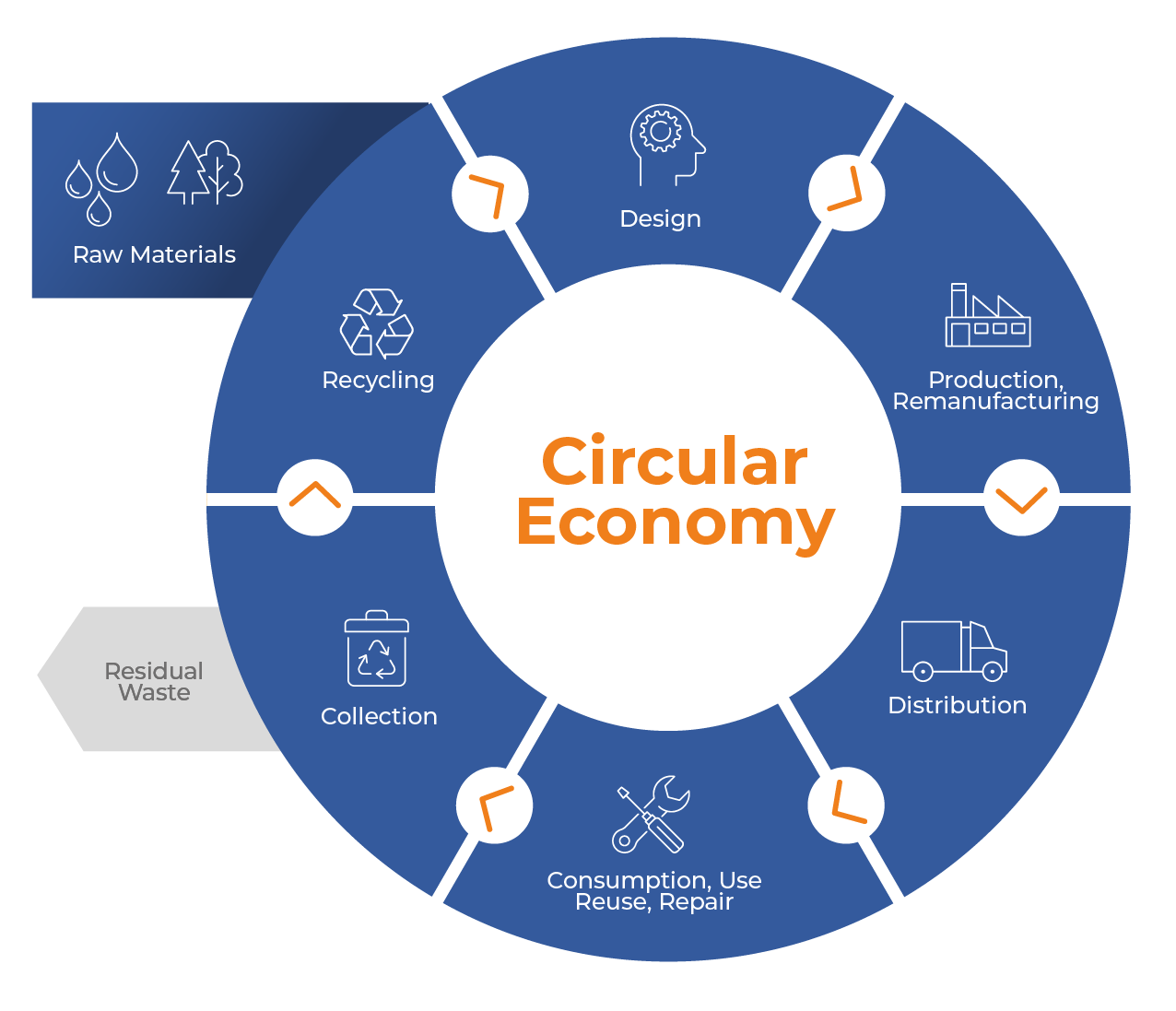
Since industrialization, the dominant economic model around the world has been linear: raw materials are extracted, they are manufactured or consumed as a product, and then when they reach the end of their useful life, they are thrown away. This take-make-waste system places enormous strain on the environment by increasing the consumption of finite resources and creating huge quantities of polluting landfills.

In a circular economy, there is little to no waste and as much reuse and recycling as possible. When a product reaches the end of its life, instead of throwing it away, its materials are kept within the economy and converted into new materials that can be used again and again, creating further value.
Why do we need a circular economy?

The world’s largest economies are falling behind on commitments to meet the goals of the Paris Agreement, which aims to limit global warming to 1.5ºC. Despite pledges made recently during the US-led Climate Summit, research carried out by BloombergNEF shows that, across the world, not enough is being done to limit climate change, and unless something changes fast, we risk reaching the point of no return.

With existing technologies, we have the ability to address around 55% of global greenhouse gas emissions. These are emissions that come from the electricity and heat we use in buildings, from our electricity grid, and from transport.

But that’s only half the story.

According to the latest data, the production of materials we use every day accounts for 45% of the world’s total CO2 emissions, and only 8.6% of resources that enter the global economy are cycled back into it. Moving to a circular economy would reduce pressure on the environment, decrease pressure on the supply of finite raw materials, and lead to more innovation. What’s more, the World Economic Forum estimates that the transition to a circular model could be worth US$1tn to the global economy by 2025, and create 100,000 new jobs.

So far, climate pledges have focused on reducing the carbon intensity of the traditional economic model, but it’s clear that this won’t be enough. Adopting a circular economy framework today in steel, plastic, aluminum, cement, and food would remove 9.3 billion tons of greenhouse gas emissions by 2050. This is equivalent to eliminating current emissions from all forms of transport globally and would put the world well on track to a net-zero future.

What role does renewable energy play in a circular economy?

Reduce-reuse-recycle is only part of the picture. A truly circular economy has to be underpinned by a transition to renewable energy sources – for two reasons.

The first is arguably the most obvious: if the energy we use to power the overall system comes from finite resources that create waste, it will never be a real circular economy.

The second, though, is more complicated. Some evidence suggests that, although the circular economy is based around energy efficiency and a reduction in inputs, collecting, sorting, processing, and restoring materials back to reusable forms takes more energy than using virgin raw materials, which means that, in some areas at least, we may need more energy to make this happen – which is why it’s vital for the energy we use to come from clean, 100% renewable sources.

What role can companies play in fostering the transition to a circular economy?

In recent months, a growing number of international brands have begun to harness the power of circular supply chains and manufacturing. Last year, Nike launched an exploratory footwear collection made from 85-90% factory and post-consumer waste, while Ikea began a large-scale furniture buyback program on Black Friday, after committing to becoming 100% circular by 2030.

It’s not just consumer goods brands. We’re starting to see circular construction sites, where companies reuse existing local materials, transform them to extend their lifespan, and pool resources. In the automotive sector, we’re seeing OEMs explore ways of designing sustainable vehicles with recycled and recoverable materials, and looking to reuse batteries from electric vehicles. Even in the mining sector, companies are investigating ways of extracting resources from waste streams to increase the environmental viability of their operations.

All of these gradual adjustments are starting to combine into a systemic shift that builds long-term resilience, increases economic opportunities, and provides environmental and societal benefits.

The circular economy isn’t a ‘nice-to-have.’ To achieve UN Sustainable Development Goal 12 on sustainable consumption and production patterns, businesses must help it to become a reality.

Why is public trust vital in achieving a circular economy?

Trust is a very important factor in getting people to opt for change. We’ve seen this as part of the ongoing energy transition: the companies and people we speak to at Atlas Renewable Energy want to be certain that, by moving to renewables, they will not experience any loss of quality or reliability in their energy supply. But it goes further than that: generating public trust in the positive impact of any change – be that transitioning the grid to renewable sources of power or transforming the economy from a linear to a circular model – is vital to success.

When it comes to simple actions, such as recycling, the costs and the benefits tend to be in the same domain – the people who perform the activity are the same people who benefit from it. This makes these actions easy for the general public to get on board with. 

However, when it comes to wider trade-offs between local and regional or even global effects, it’s a little more difficult to get people to immediately understand the reasons behind the choices being made. Sometimes, reality can be counterintuitive, which can lead people to assume that positives – or negatives – exist, when in fact they don’t.

Fortunately, a well-established and internationally recognized framework to achieve this already exists. Life Cycle Assessment (LCA) is a tool we already use within the renewable energy industry, and by applying it to the circular economy, it is possible to test the impacts of circular business models, validate assumptions and get feedback for improvement, as well as help define targets and indicators.

Throughout the work we have done in communities, with different industries, and with numerous stakeholders, our experience has always been that we need to be able to prove our assertions in order to achieve buy-in, and we’ve done this time and time again through a consultative approach. 

By using science-backed methodologies such as LCA, companies and governments can be transparent about the upsides and downsides of transitioning to a circular economy, and enable the public to make evidence-based decisions on whether or not to support an initiative.

The time to shift to a circular economy is now

Our inefficient linear model is pushing our planet to the brink of a climate crisis, and depleting the resources we need to support our communities to build back better after the pandemic. It’s time to move towards a circular economy, with renewable energy as a central pillar. 

When it comes to creating this new, more sustainable future, no one company or even country can do it alone. Those at the forefront of the circular economy must continually measure their progress and clearly communicate the results of their efforts. By doing this, they not only build trust but also encourage everyone else to follow suit.

In partnership with Castleberry Media, we are committed to taking care of our planet, therefore, this content is responsible with the environment.*

Share This Entry

More articles

October 06, 2025 Our point of view
Toward COP30: How Renewable Energy Is Rewriting Latin America’s Opportunity Set
October 05, 2025 Our point of view
Renewable Energy-Driven Data Centers: Shaping Mexico's Digital Future
October 05, 2025 Our point of view
The Food Industry and Energy Transition: A Recipe Toward Competitiveness

October 02, 2025 Our point of view
Chilean Mining Sector in Energy Transition: Perspectives and Key Insights Amid New European Regulations
September 23, 2025 Our point of view
Walking the Walk: Making Sustainability Tangible
July 23, 2025 Our point of view
Renewable Energy: The Strategic Choice for Energy Transition in Mining and Oil Operations
July 19, 2025 Our point of view
Innovation That Protects: How Atlas Embedded Health and Safety at the Core of Its Operational Excellence
June 17, 2025 Our point of view
How Renewable Energy Will Power Mexico's Economic Transformation by 2030
June 17, 2025 Our point of view
From Generation to Energy Consumption: The Private Sector's Role in the Energy Transition
May 28, 2025 Our point of view
Energy Trends in the Colombian Market
May 05, 2025 Our point of view
Q&A: Energy Buyer Transitioning Operations to Renewable Energy with Atlas
April 15, 2025 Our point of view
Sustainable Operations: Why Data Centers Are Turning to Renewables
April 15, 2025 Our point of view
The Power of PPAs: Renewable Energy in the Regional Automotive Industry
April 04, 2025 Our point of view
The Strategic Edge of Renewable Energy: Business Advantages
March 10, 2025 Our point of view
Powering AI's Revolution: the Renewable Energy Imperative

March 03, 2025 Our point of view
How BESS is Revolutionizing Latin America's Renewable Industry
February 24, 2025 Our point of view

Renewable Energy Drives Sustainability in the Food Industry

February 06, 2025 Our point of view
The Strategic Role of Storage in Latin America's Energy Transition
February 04, 2025 Our point of view
By the Numbers: Why Companies Are Choosing Renewable Energy Contracts
January 24, 2025 Our point of view
Energy Transition: Opportunities for Multinationals
January 11, 2025 Our point of view
The Multiple Benefits of Renewable Energy Consumption for Companies
November 21, 2024 Our point of view
Clean energy for data centers: the rise of PPAs as a secure solution
November 21, 2024 Our point of view
Operational Cost Optimization: The Strategic Role of PPAs Amidst the Rising Energy Prices
November 21, 2024 Our point of view
How Oil Companies Can Decarbonize Through PPA Contracts
October 30, 2024 Our point of view
Forging Strategic Alliances: Bridging the Gap Between O&G and Renewable Energy
October 16, 2024 Our point of view
The Role of Renewable PPAs in Mitigating Price Volatility
August 24, 2024 Our point of view
Why Are Telecoms Transitioning to Renewable Energy?
July 08, 2024 Our point of view
How are renewable energies transforming the Brazilian economy?
July 03, 2024 Our point of view
PPAs and Contract Structures: Tailoring Renewable Energy Procurement to Corporate Needs
June 25, 2024 Our point of view
Renewable Energies as Key Players in CFO Strategies
June 18, 2024 Our point of view
Colombia’s Roadmap: A Pathway to a Cleaner Energy Matrix
June 18, 2024 Our point of view
Atlas Renewable Energy's big bet on renewable energy development in Colombia.
June 17, 2024 Our point of view
The Pivotal Role of Renewable Energies in Mitigating El Niño's Impact in Colombia
June 17, 2024 Our point of view
Understand the limits of carbon capture in the energy transition
June 17, 2024 Our point of view
Understand the advantages of contracting renewable energy for your company
April 26, 2024 Our point of view
Navigating the Energy Transition: The Impact of COP 28 Agreements on Corporate Strategy
April 10, 2024 Our point of view
AI and its impact on renewable energy
April 09, 2024 Our point of view
Social License: The Crucial Factor in Ensuring a Responsible Energy Transition
February 16, 2024 Our point of view
How innovative technologies are driving the future of renewable energy
January 30, 2024 Our point of view
Is a Dollar-Based PPA Ideal for Achieving Your Company’s Sustainability Objectives?
January 24, 2024 Our point of view
How sustainable energy strategies can provide stability in uncertain times
December 12, 2023 Our point of view
Innovation in Corporate Clean Energy: Atlas Renewable Energy is Leading the Way in Latin America
November 09, 2023 Our point of view
Renewables and Storage: The perfect combination to meet energy demand
August 03, 2023 Our point of view
CLEAN ENERGY FOR THE ALUMINUM INDUSTRY
June 21, 2023 Our point of view
How renewable energy sources can contribute to the food industries sustainability journey
May 09, 2023 Our point of view
Powering the concrete and cement industry with renewable energy: A pathway to a just transition for the construction sector
May 09, 2023 Our point of view
Unlocking the full potential of renewable energy investment in partnership with development finance institutions
May 09, 2023 Our point of view
GREEN HYDROGEN: TOWARDS NET ZERO
April 26, 2023 Our point of view
Renewable energy: Making the circular economy happen in the chemicals industry
April 21, 2023 Our point of view
Atlas recognizes the development of renewable technologies in Latin America
March 27, 2023 Our point of view
How the surge in renewable energy investment is making it easier for companies to transition
February 24, 2023 Our point of view
IN CONVERSATION WITH ATLAS: HOW WE PARTNER WITH CLIENTS TO CREATE A REAL IMPACT
January 27, 2023 Our point of view
WHY COP27 IS MORE RELEVANT THAN EVER
January 12, 2023 Our point of view
What governments should take into account to make a real transition to renewable energies
December 13, 2022 Our point of view
Renewable Energy Trend Watch: Self-generation in Brazil
December 07, 2022 Our point of view
What you need to know about the rise of I-RECs in Brazil
October 18, 2022 Our point of view
How I-RECs can offer a new level of transparency as companies get real on climate change
September 26, 2022 Our point of view
What can renewable energy do for the mining sector?
August 29, 2022 Our point of view
How the Inflation Reduction Act could turbocharge the renewable energy sector
August 16, 2022 Our point of view
Power Purchase Agreements (PPAs): A Source of Stability in a Climate of Change
June 21, 2022 Our point of view
Web3 and the metaverse: an inflection point for the energy transition
June 07, 2022 Our point of view
What to look out for in a renewable energy contract
June 01, 2022 Our point of view
TOWARDS NET-ZERO INDUSTRIAL HUBS: THE ROLE OF RENEWABLE ENERGY
May 20, 2022 Our point of view
Avoiding Greenwashing and Make the Shift to True Sustainability
April 06, 2022 Our point of view
Closing the green divide in the tech industry
March 18, 2022 Our point of view
How renewables can help feed the world without overwhelming the planet
February 24, 2022 Our point of view
Ensuring the triple bottom line for your renewable energy strategy: the biggest return on investment
February 23, 2022 Our point of view
The vital role corporations play in achieving the COP26 commitments
December 20, 2021 Our point of view
How generating sustainable change at scale leads to positive tangible environmental and consumer impact
December 20, 2021 Our point of view
Diversity and Inclusion: The Atlas Perspective
October 28, 2021 Our point of view
COP26: What corporations should know
October 27, 2021 Our point of view
LAGGARDS AND LEADERS: CLOSING THE GAP IN THE TRANSITION TO RENEWABLE ENERGY
October 26, 2021 Our point of view
MAKING CIRCULAR ECONOMY HAPPEN
October 08, 2021 Our point of view
WHY GREEN HYDROGEN IS PART OF THE ENERGY MATRIX OF THE FUTURE
October 06, 2021 Our point of view
WHY COVERING THE ENERGY NEEDS OF DIGITALIZATION SUSTAINABLY IS IMPORTANT
July 07, 2021 Our point of view
ELECTRIC VEHICLES AND RENEWABLE ENERGY: A PERFECT MATCH
July 01, 2021 Our point of view
MAKING IT COUNT: DIVERSITY, INCLUSION, AND SOCIAL DEVELOPMENT IN RENEWABLE ENERGY
July 01, 2021 Our point of view
SUSTAINABLE LEADERSHIP: FROM WORDS TO ACTION
June 30, 2021 Our point of view
WHY WE’RE STILL OPTIMISTIC ABOUT FIGHTING CLIMATE CHANGE
May 10, 2021 Our point of view
RENEWABLE ENERGY IS AT ITS BEST: SOLAR SHINES BRIGHT
May 07, 2021 Our point of view
WHAT THE LEADERS SUMMIT ON CLIMATE MEANS FOR CORPORATIONS
March 30, 2021 Our point of view
CARBON PRICING IS INEVITABLE – DON’T BE CAUGHT OUT
March 29, 2021 Our point of view
A SYSTEMIC VIEW OF DIVERSITY AND INCLUSION
March 18, 2021 Our point of view
BIDEN’S PLAN: RENEWABLES ON THE RISE IN THE US
March 15, 2021 Our point of view
THE NEW GREEN CONSUMER: HOW EMERGING TRENDS ARE SHAPING SUSTAINABILITY INITIATIVES
March 15, 2021 Our point of view
WHY INVESTORS ARE FLOCKING TO THE RENEWABLES SECTOR
February 19, 2021 Our point of view
2021: BEYOND THE INFLECTION POINT FOR RENEWABLE ENERGY
December 14, 2020 Our point of view
Corporate sustainability: is your company doing enough?
November 20, 2020 Our point of view
Creating renewable energy success stories: experience in the chemical sector
November 12, 2020 Our point of view
How ESG is taking center stage in Latin America
October 16, 2020 Our point of view
Joining forces: Why you should look for innovation in your solar energy partner
August 21, 2020 Our point of view
Why now is the time to invest in Latin America’s renewables market
August 20, 2020 Our point of view
Gaining certainty in uncertain times: the impact of renewables on energy-intensive industries in Latin America
July 20, 2020 Our point of view
How renewable energy project execution is powering ahead despite Covid-19
July 06, 2020 Our point of view
7 factors influencing the renewables market in Latin America
June 03, 2020 Our point of view
The rise of corporate PPAS in Latin America
May 11, 2020 Our point of view
Can renewable energy power Latin America’s recovery after Covid-19?
February 02, 2020 Our point of view
Atlas Renewable Energy’s innovative approach to renewable energy
February 02, 2020 Our point of view
Education and Solar Energy go hand in hand in rural Mexico
June 18, 2019 Our point of view
Why are large mining companies embracing Solar Energy?
May 17, 2019 Our point of view
How financial innovation can drive the growth of renewables in Latam